

Diagnostic Testing · All Ages
Allergy & Skin Prick Testing
Skin-prick allergy testing, performed when clinically appropriate to assess possible environmental or food-allergy triggers, based on your history and clinical assessment.
An uninsured materials fee applies when skin-prick testing is performed. Patients are informed before testing.
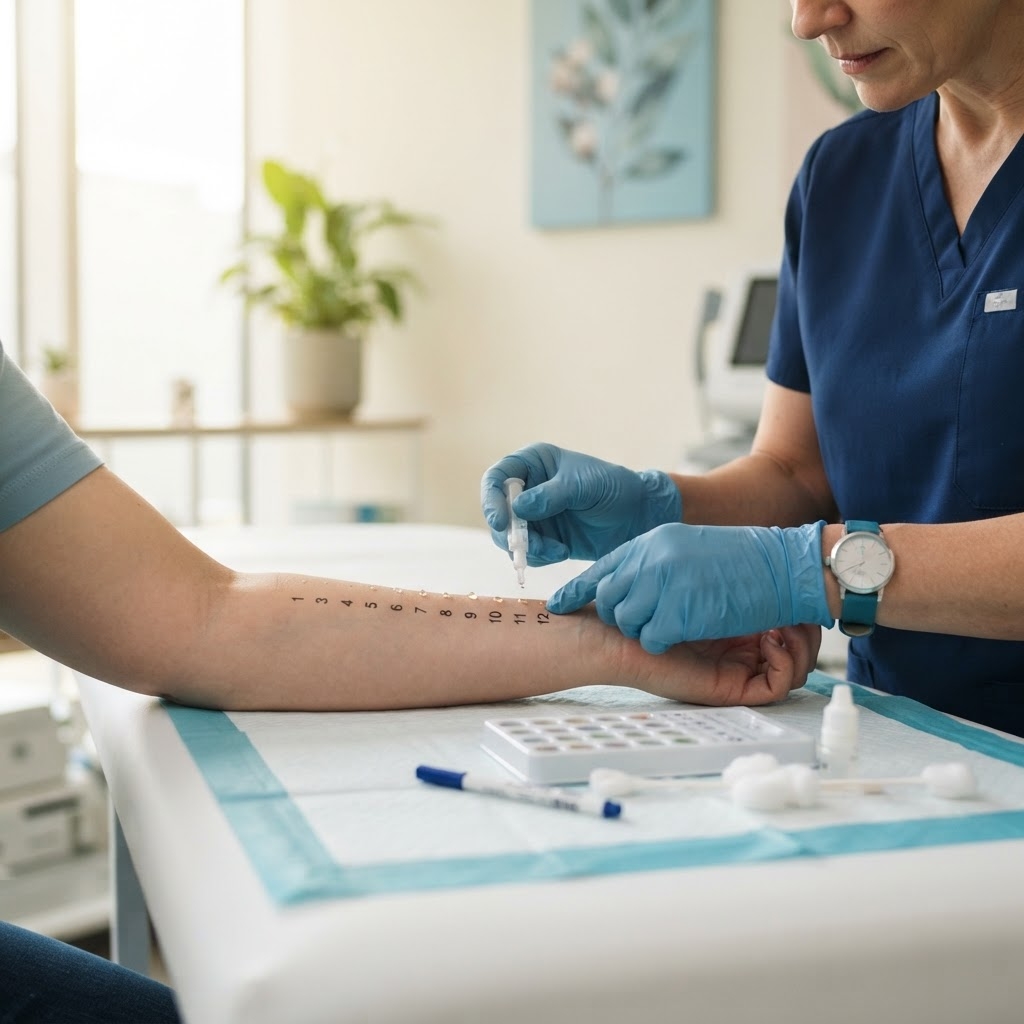
Allergy skin-prick testing may be performed when clinically appropriate to assess possible environmental or food-allergy triggers. The allergens selected for testing are based on the patient’s history and clinical assessment.
Skin-prick-test results must be interpreted together with the patient’s symptoms and medical history. A positive result indicates sensitization but does not necessarily confirm a clinical allergy.
Skin-prick-testing materials fee
An uninsured materials fee applies when skin-prick testing is performed. This fee is for the testing materials and supplies provided for the procedure. It is separate from medically necessary insured physician services, which are billed to the Alberta Health Care Insurance Plan when applicable.
Patients will be informed of the fee before testing is performed. Please contact Lumara Specialty Clinic before your appointment if you have questions about the fee or if it may cause financial hardship. See our Uninsured Services & Fees page for more information.
Signs & Symptoms
- Sneezing, itchy or watery eyes, and nasal congestion
- Hives, eczema flare-ups, or unexplained skin reactions
- Wheezing or coughing after specific triggers, such as pets, pollen, or dust
- Digestive symptoms or suspected reactions after eating certain foods
- Reactions to insect stings, medications, or latex
- Year-round or seasonal symptoms with an unclear trigger
How We Diagnose It
Detailed Clinical History
We start with a thorough conversation about your symptoms, triggers, timing, and family history — the foundation for choosing which allergens to test.
Panel Selection Based on History
The allergens selected for testing are based on your history and clinical assessment, rather than testing everything indiscriminately.
Skin Prick Testing
A grid of small droplets is placed on the forearm or back, each introduced with a tiny superficial prick — no injections — with results typically read after about 15–20 minutes.
Specific IgE Blood Testing
Used to measure allergen-specific IgE when skin testing is unsuitable, or when additional information may help clinical interpretation.
Component-Resolved Diagnostics
Advanced testing that may help refine risk assessment and distinguish patterns of primary sensitization from some cross-reactive sensitization, especially useful in complex food allergy cases.
Treatment Options
Personalized Avoidance Plans
Clear, practical guidance on what to avoid and what's safe, tailored to your test results, history, and lifestyle rather than general assumptions.
Medication Optimization
A tailored step-up or step-down plan for antihistamines, nasal sprays, or other symptom control medication, adjusted as your symptoms or exposures change.
Referral to Immunotherapy
When appropriate, we discuss allergen immunotherapy as a disease-modifying or desensitization option, depending on the condition.
What to Expect
- 1
Before Your Visit
Some antihistamines may need to be paused before skin prick testing. Follow the medication instructions provided by the clinic — do not stop any prescribed medication unless instructed.
- 2
During Testing
Testing duration varies by the tests required. Skin prick results are typically read after about 15–20 minutes and involve light scratches on the forearm or back — no needles.
- 3
After Testing
When results are available the same day, they'll be reviewed with you in clinical context and next steps discussed.
Frequently Asked Questions
Does allergy skin prick testing hurt?
How long do I need to stop antihistamines before testing?
How many allergens can be tested at once?
Can children be allergy tested?
What happens if a test is positive?
Related Conditions
Allergic Rhinitis
Inflammation of the nasal passages triggered by allergens like pollen, dust mites, or pet dander — commonly known as hay fever.
Asthma
A chronic airway condition causing inflammation, tightening, and extra mucus that make breathing harder — often triggered or worsened by allergies.
Eczema
A chronic, itchy skin condition driven by immune and skin-barrier factors, often linked to allergies and family history of atopic conditions.
Let's find the right care plan for you.
Ask your physician for a referral to our clinical team and get answers, not just a diagnosis.