

Ongoing Condition Care · All Ages
Eczema (Atopic Dermatitis) Care
Assessment and long-term management, including evaluation of relevant allergic triggers when clinically indicated, skin-barrier care and individualized treatment.
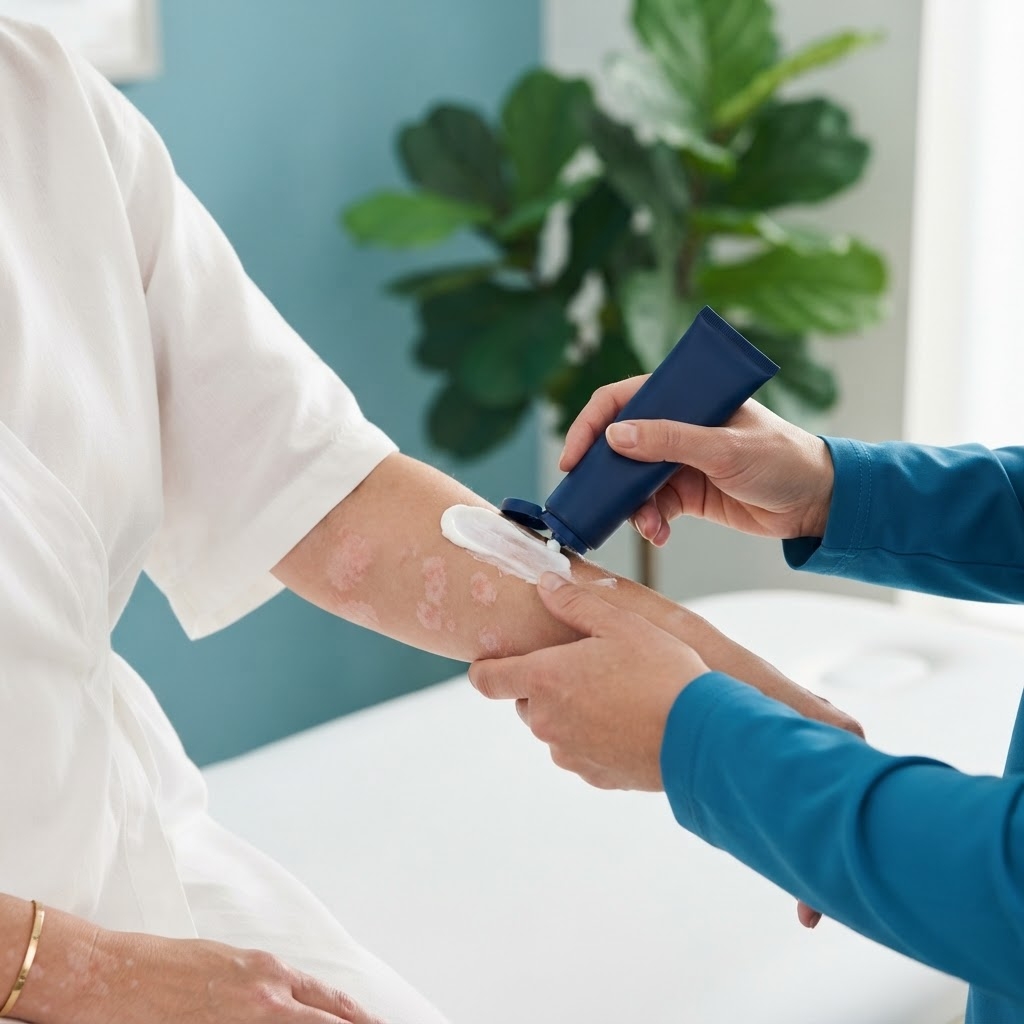
Eczema is often more than a skin condition — for many patients, especially young children, it’s the first visible sign of an allergic tendency that can also involve food allergy, asthma, and hay fever later on. At Lumara, we treat the skin and look at the bigger picture, assessing whether allergic triggers are contributing and watching for early signs of the broader atopic pattern.
Good eczema management is built on consistency: a solid skin barrier routine, correctly used topical treatment, and, when infection risk is a factor, a properly diluted bleach bath protocol. We spend time making sure you know how and when to use each part of your plan, because technique and consistency matter as much as the treatment itself.
Where allergy testing is appropriate, we use it to answer a specific question rather than to generate a long list of foods to avoid. Unnecessary dietary restriction can create new problems, so our goal is a plan that controls your skin while keeping daily life as normal as possible.
Signs & Symptoms
- Dry, itchy patches of skin, often on the face, hands, elbows, or behind the knees
- Red or inflamed skin that worsens with scratching
- Thickened or leathery skin from chronic irritation
- Flares that may be influenced by irritants, infection, climate, scratching, or, in selected patients, clinically relevant allergens
- Sleep disruption from nighttime itching, especially in young children
How We Diagnose It
Skin Assessment & History
We examine your skin's pattern and distribution and ask about flare timing, family history of allergic conditions, and what you've already tried.
Allergy & Trigger Testing
We consider allergy testing when the history suggests an immediate food reaction, persistent moderate-to-severe disease despite optimized treatment, or another specific clinical question — not as a routine screen for every patient.
Assessment for Related Atopic Conditions
Since eczema sometimes precedes food allergy, asthma, and allergic rhinitis, we assess for early signs of these related conditions as part of your visit.
Treatment Options
Skin Barrier Repair
Consistent moisturizing and barrier-focused skincare form the foundation of every eczema plan, reducing flare frequency and severity over time.
Topical Therapy
We guide the appropriate use of topical anti-inflammatory treatments, including how much to apply, where, and for how long, tailored to your skin's needs.
Bleach Bath Protocol
For eczema prone to skin infection, we provide clear instructions for diluted bleach baths, a well-established way to reduce bacteria on the skin's surface.
Trigger Avoidance Guidance
When testing identifies specific food or environmental triggers, we help you build a practical avoidance plan without unnecessary dietary restriction.
What to Expect
- 1
Initial Assessment
We review your skin, symptom history, and any suspected triggers, and discuss whether allergy testing is appropriate for your situation.
- 2
Building Your Skincare Routine
You'll leave with a specific, step-by-step skincare and treatment routine, including product guidance and, if needed, a bleach bath protocol.
- 3
Ongoing Monitoring
We follow up to assess how your skin is responding, watch for signs of the atopic march, and adjust your plan as your skin and triggers evolve.
Frequently Asked Questions
Is eczema caused by food allergies?
What is the atopic march?
Are bleach baths safe?
Will my child outgrow eczema?
How is eczema different from a food allergy rash or hives?
Related Conditions
Eczema
A chronic, itchy skin condition driven by immune and skin-barrier factors, often linked to allergies and family history of atopic conditions.
Egg Allergy
A common early-childhood food allergy that most children outgrow, often starting with tolerance to well-baked egg before whole egg becomes safe.
Food Allergy
An overactive immune response to a specific food protein — from mild hives to life-threatening anaphylaxis. A proper diagnosis is key to living safely and confidently.
You Might Also Need
Diagnostic Testing
Allergy & Skin Prick Testing
Skin-prick allergy testing, performed when clinically appropriate to assess possible environmental or food-allergy triggers, based on your history and clinical assessment.
An uninsured materials fee applies when skin-prick testing is performed. Patients are informed before testing.
Learn moreOngoing Condition Care
Eczema
Assessment and long-term management, including evaluation of relevant allergic triggers when clinically indicated, skin-barrier care and individualized treatment.
Learn moreLife-Stage Care
Pediatric Care
Allergy and immunology care built for infants, children, and teens, covering early food introduction, growth-conscious food allergy management, and school-ready action plans.
Learn moreLet's find the right care plan for you.
Ask your physician for a referral to our clinical team and get answers, not just a diagnosis.